
LISTEN to the 13-minute podcast.
WATCH the 48-second video.
The U.S. Department of Transportation (USDOT) is giving a formidable boost to Kentucky and Ohio through more than $1.5 billion for the Brent Spence Bridge Project.
In 2021, the bipartisan Infrastructure Investment and Jobs Act (IIJA) was passed, allocating $1.2 trillion to modernize the United States’ infrastructure. Now, Kentucky and Ohio are among the states that are benefiting from the bill.
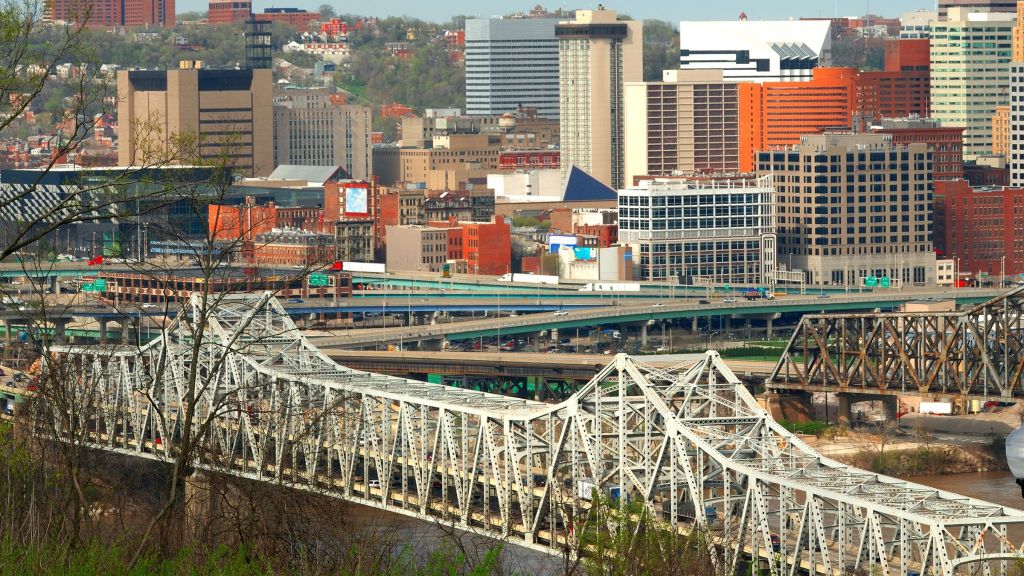
President Biden recently visited the area and met with regional officials (including Kentucky Gov. Andy Beshear and Ohio Gov. Mike DeWine) to celebrate funding for a new companion bridge to the overburdened Brent Spence Bridge, a major I-75 crossing over the Ohio River. The old bridge will also be rehabilitated and reconfigured, and other corridor improvements made.
The project win did not come without years of advocacy that the bridge — as a critical thoroughfare for the traveling public and freight carriers and an economic driver for the north and southeastern parts of the U.S. — is an American bridge in trouble.
“Certainly, I think the project itself represents the best of bipartisan [efforts],” says Chad LaRue, Executive Director of the Kentucky Association of Highway Contractors (KAHC). “Over the five-year period of the IIJA bill, it will bring in an additional $200 million a year, on average, to Kentucky for its transportation needs. That will bring our total federal funding available for roads from around $750 million to about $900 million” because of competitive grants funded by IIJA.
Bridging to Tomorrow
The IIJA represents a nexus for the country. The federal gas tax brings in less revenue than it once did. More fuel-efficient vehicles, and hybrid and electric vehicles, mean less reliance on fossil fuels and lower gas tax receipts via federal and state gas taxes.
LaRue’s group worked for a decade to build attention on the federal level for the need to fund a new bridge.
Opened in November 1963, the double-decker, cantielevered truss bridge was designed to handle 80,000 vehicles — including 3,000 to 4,000 trucks — a day. And for many years it served the region’s needs. However today, 160,000 vehicles, including 30,000 trucks pass over the bridge daily. [Source: Ohio-Kentucky-Indiana Regional Council of Governments]
The iconic bridge is a mere slice of what infrastructure problems our nation faces. Over-capacity interstates, crumbling roads and bridges, flooded waterways, crowded ports and airports, and transit systems with maintenance backlogs impact all Americans, the supply chain, and those whose jobs are tied to the infrastructure industry.
The IIJA is arguably the largest infusion of federal dollars for infrastructure since the national interstate system was built decades ago.
However, without ongoing and financial resources from our nation’s federal leaders, the Highway Trust Fund (HTF) will continue to lose purchasing power and funding gaps will persist.
In Kentucky, LaRue notes that the Kentucky Transportation Cabinet’s long-range strategic transportation plan shows about “a 23-year outlook on what the funding levels will be and what they will buy during that time … and that’s going to be a gap of about $895 million per year, on average, over the next 23 years.” Because of this, some projects identified for modernization and safety and capacity upgrades will have to wait.
Stay current on how American communities benefit from federal investment in infrastructure. Subscribe to our e-mail newsletter and follow us on social media.
 No Time For Delays